
THE GAMHAIN EIERCODE
Mapping the Unseen Architecture That Controls the Human Condition
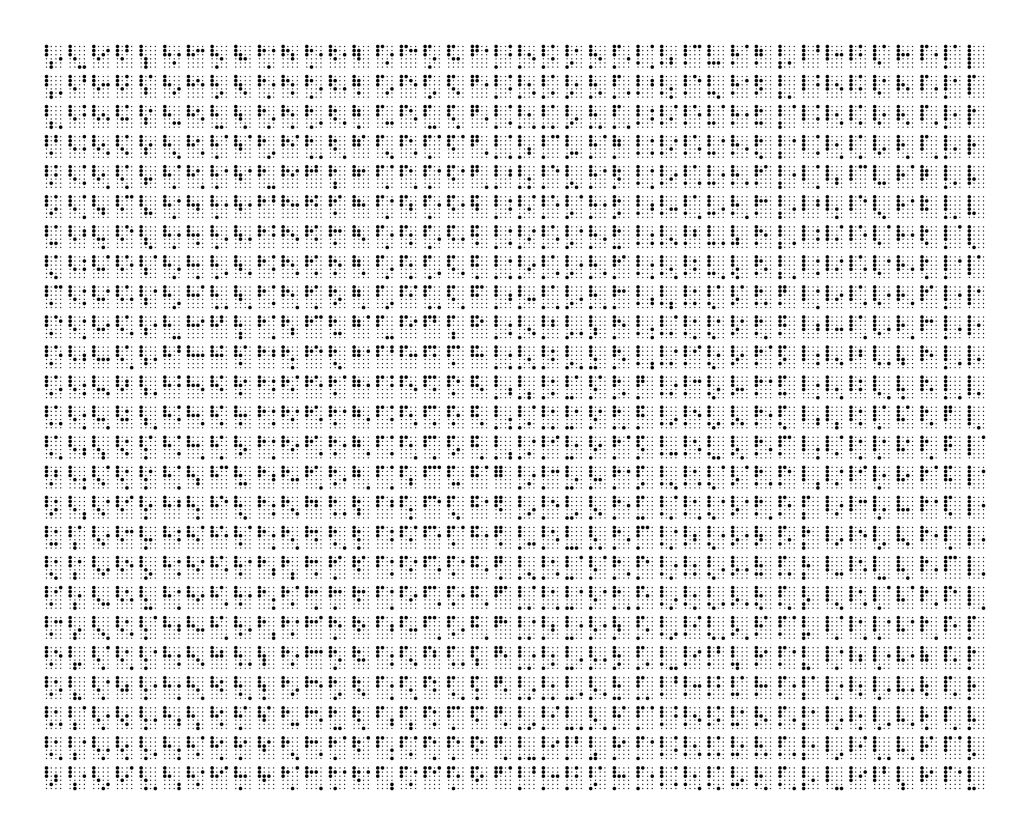
The Eiercode asserts that the Human Emotional Signature is composed of 134,596 discrete configurations.
No more, no less.
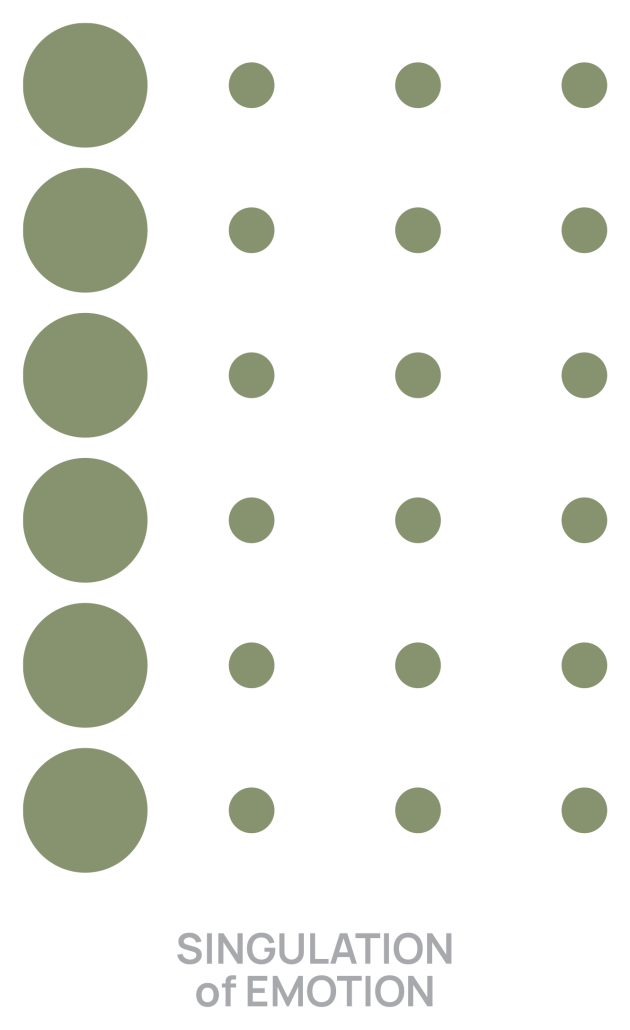
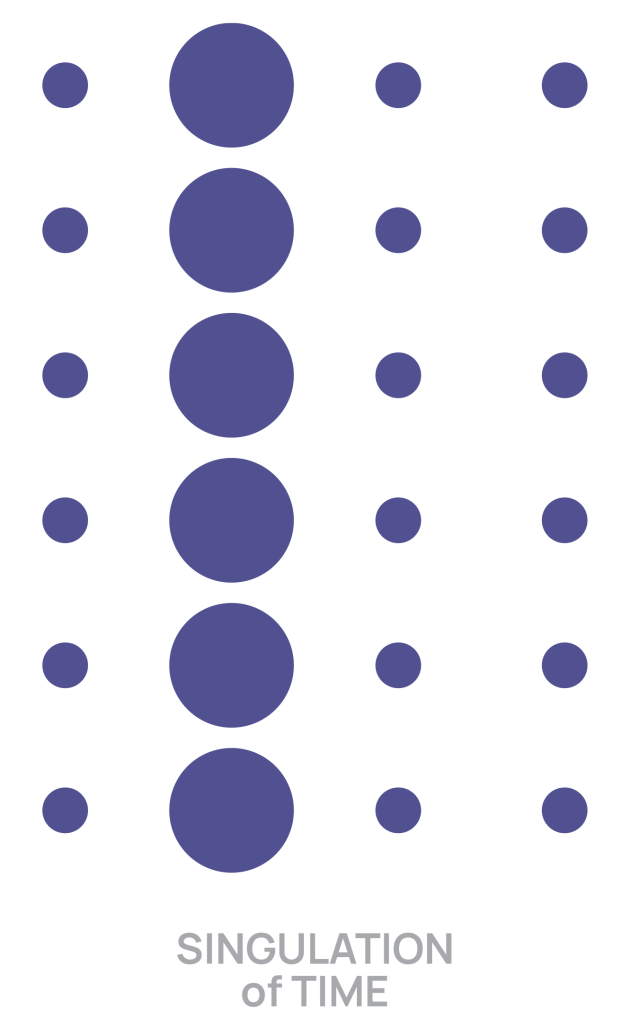
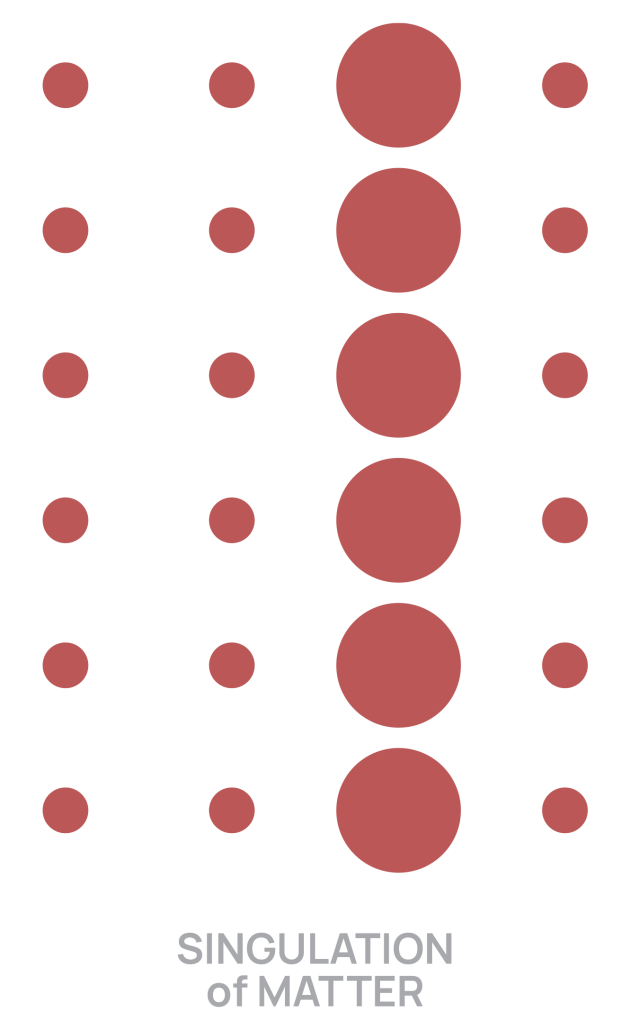
Each configuration in the Eiercode represents a fragment of a larger Lattice shaped by The Four Foundational Conditions: Emotion, Time, Matter, and Void. These Conditions act through one another, never alone, forming patterns that only gain meaning in relation.
Yaakov “Calf” Gamhain, the man who was given The Code, called this principle Relationalism: nothing in the Lattice exists in isolation, and every form expresses itself only through the forces surrounding it.
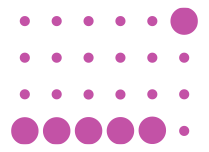
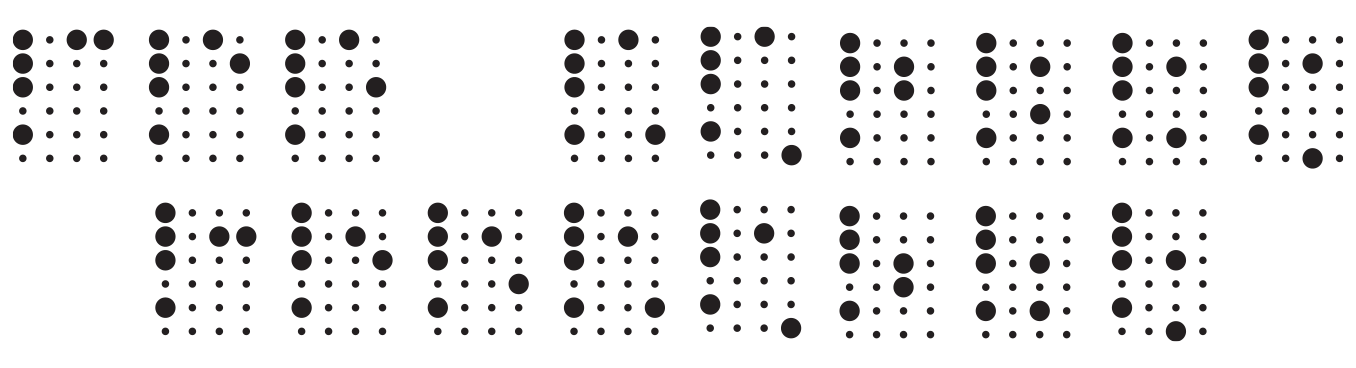
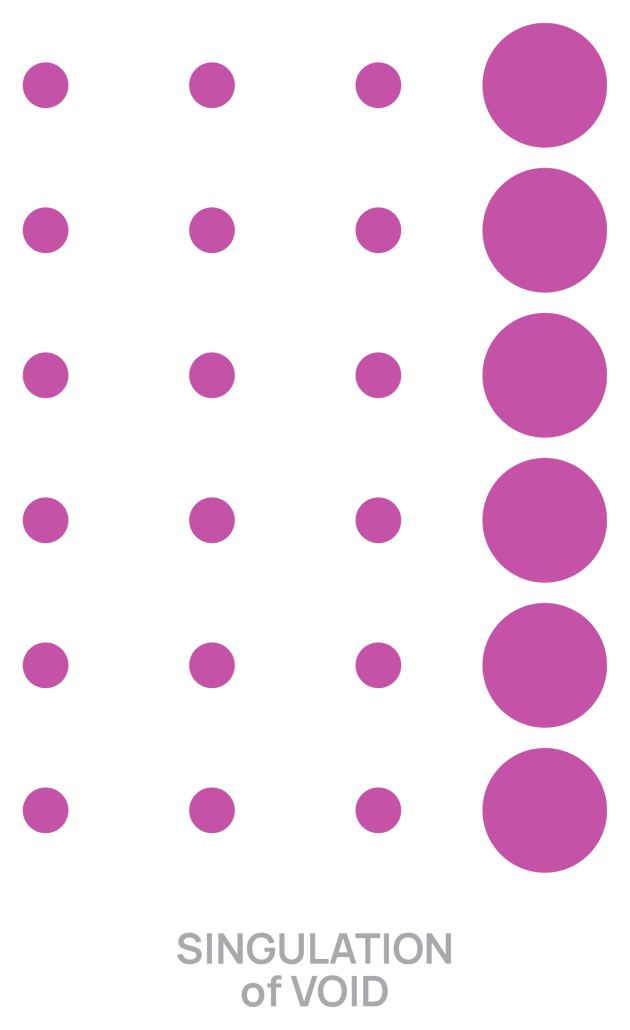
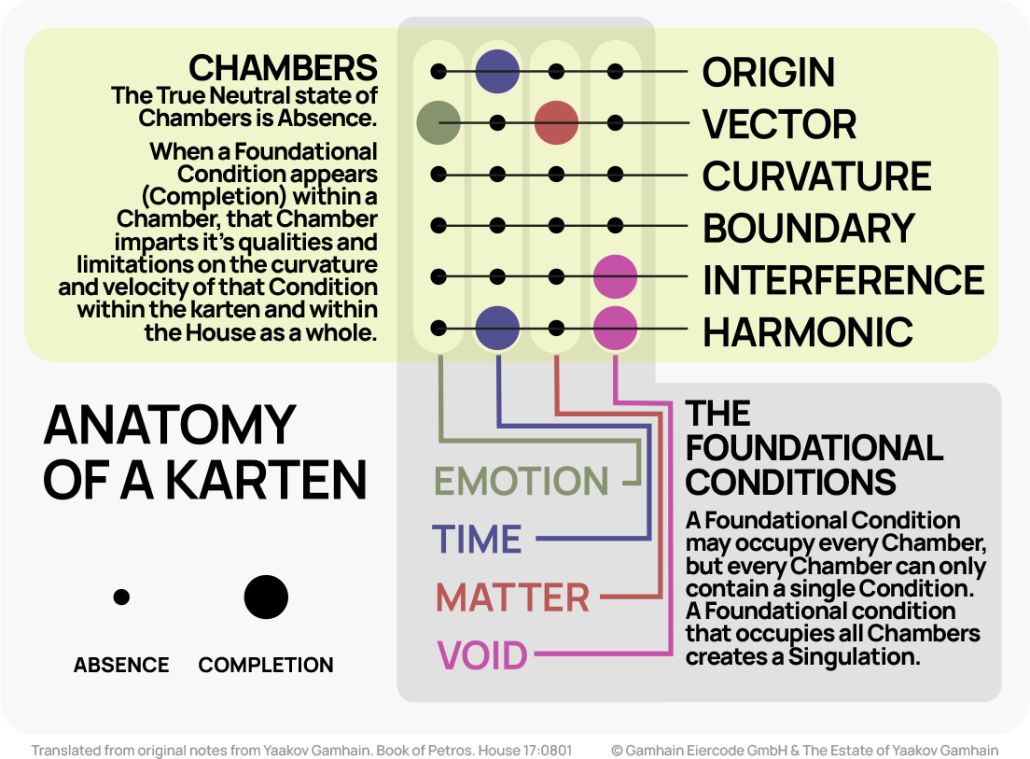
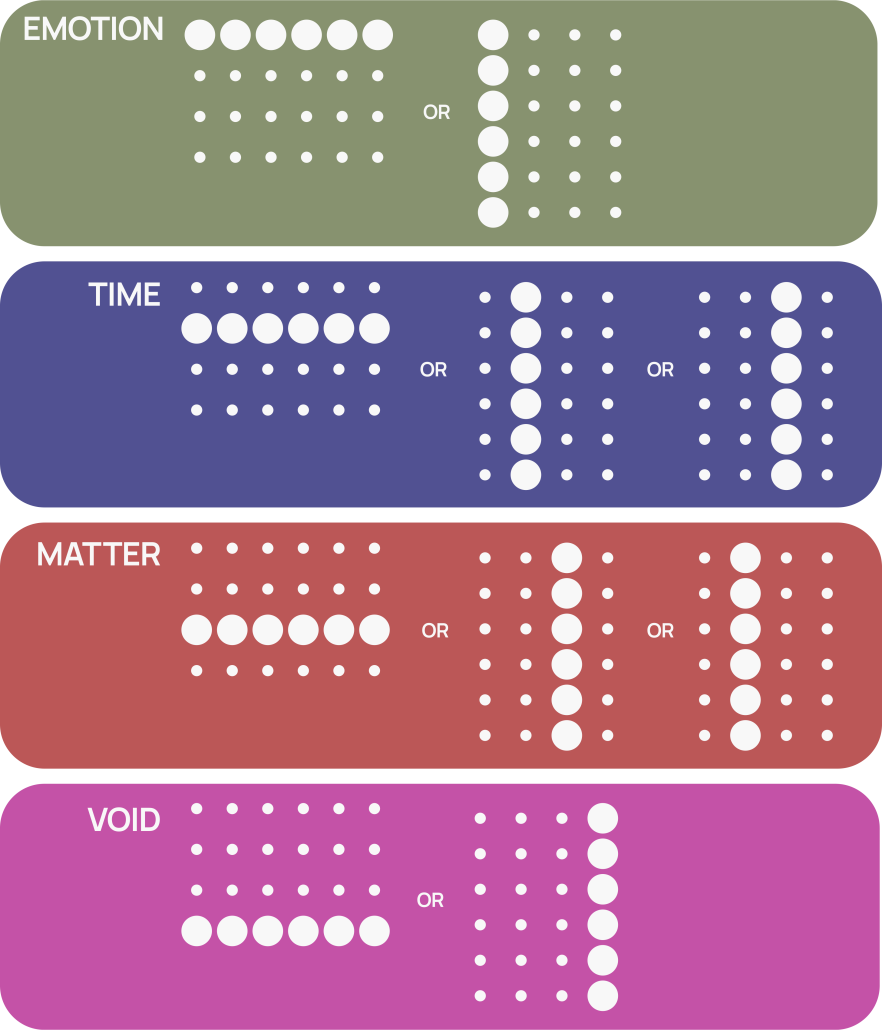
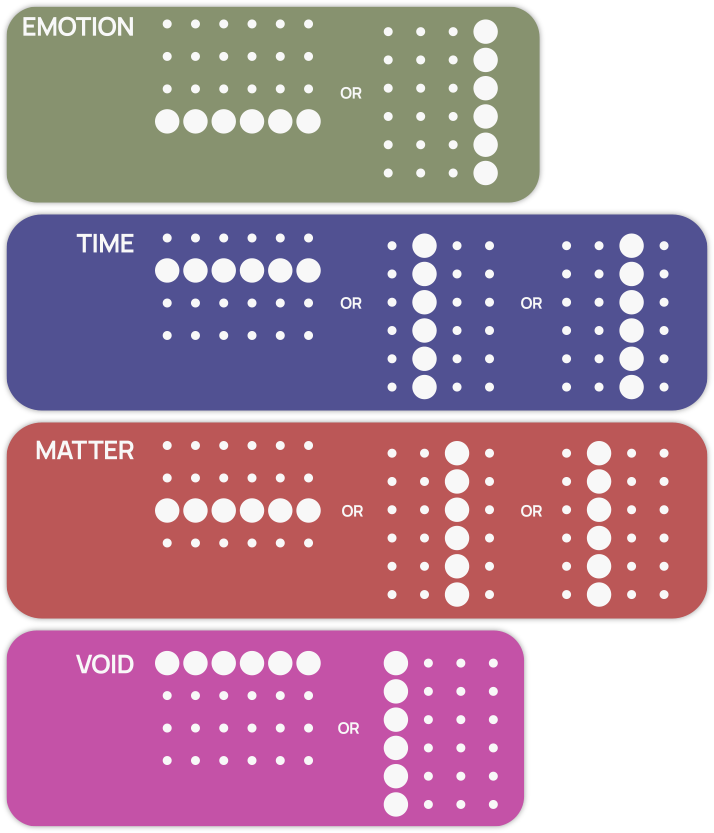
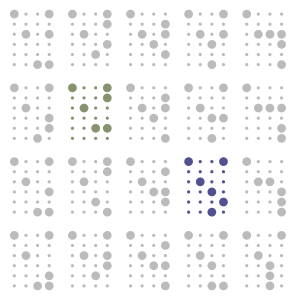
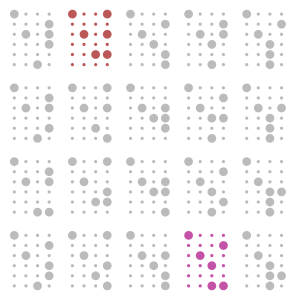
The smallest expression of this interplay is the karten, a six-by-four grid Calf used to chart emotional arrangements. Each Chamber registers either Completion or Absence, and the pattern they form reveals the karten’s alignment with the Four Conditions – Emotion, Time, Matter and Void.
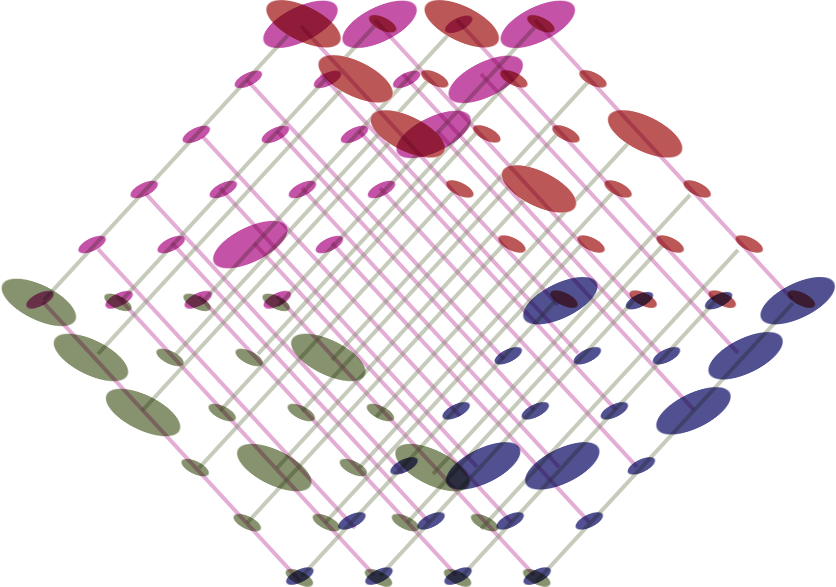
Alone, a karten appears fixed; linked with others it behaves like a waveform, and in larger structures it becomes a node within the Lattice.
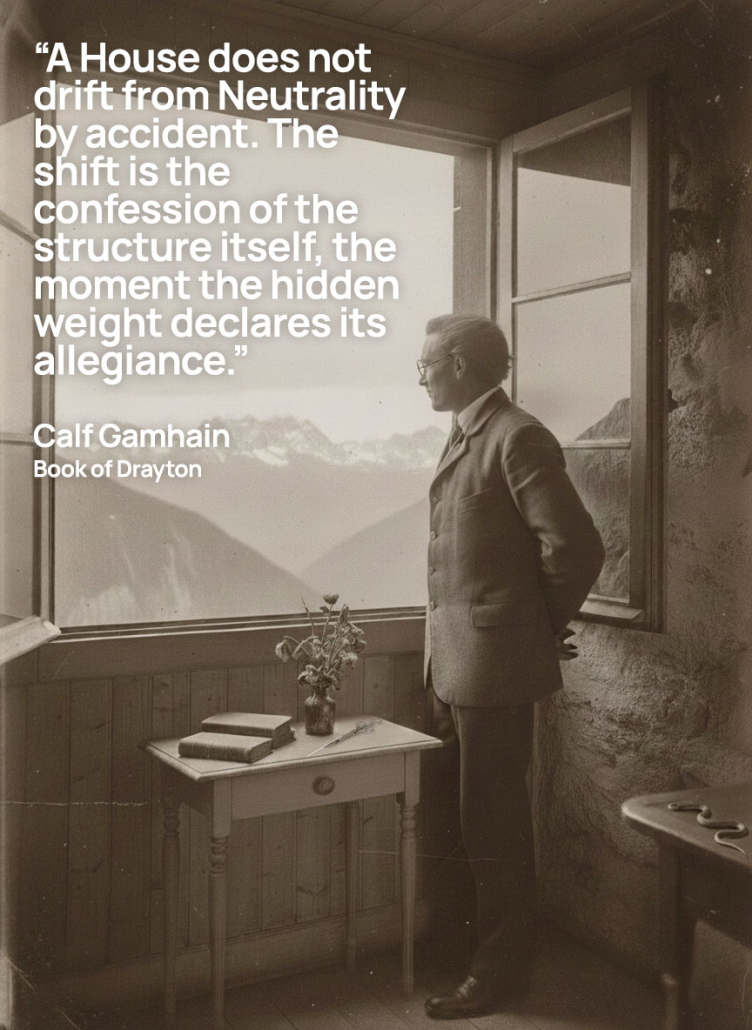
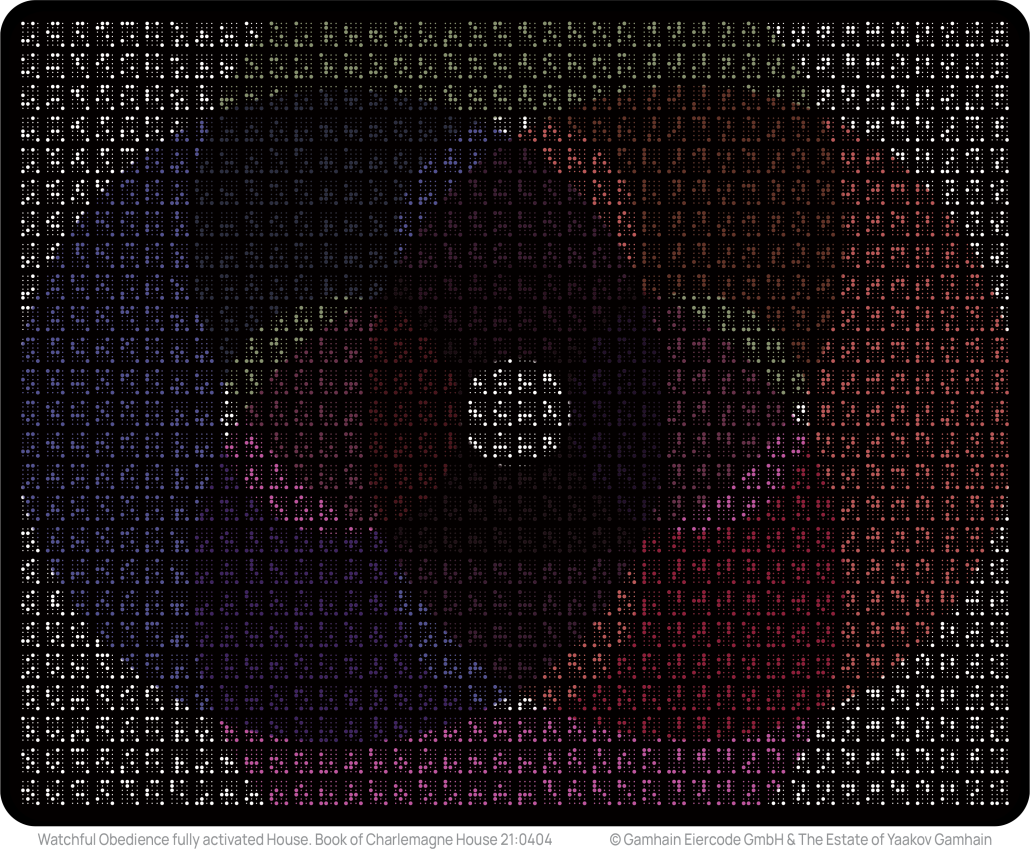
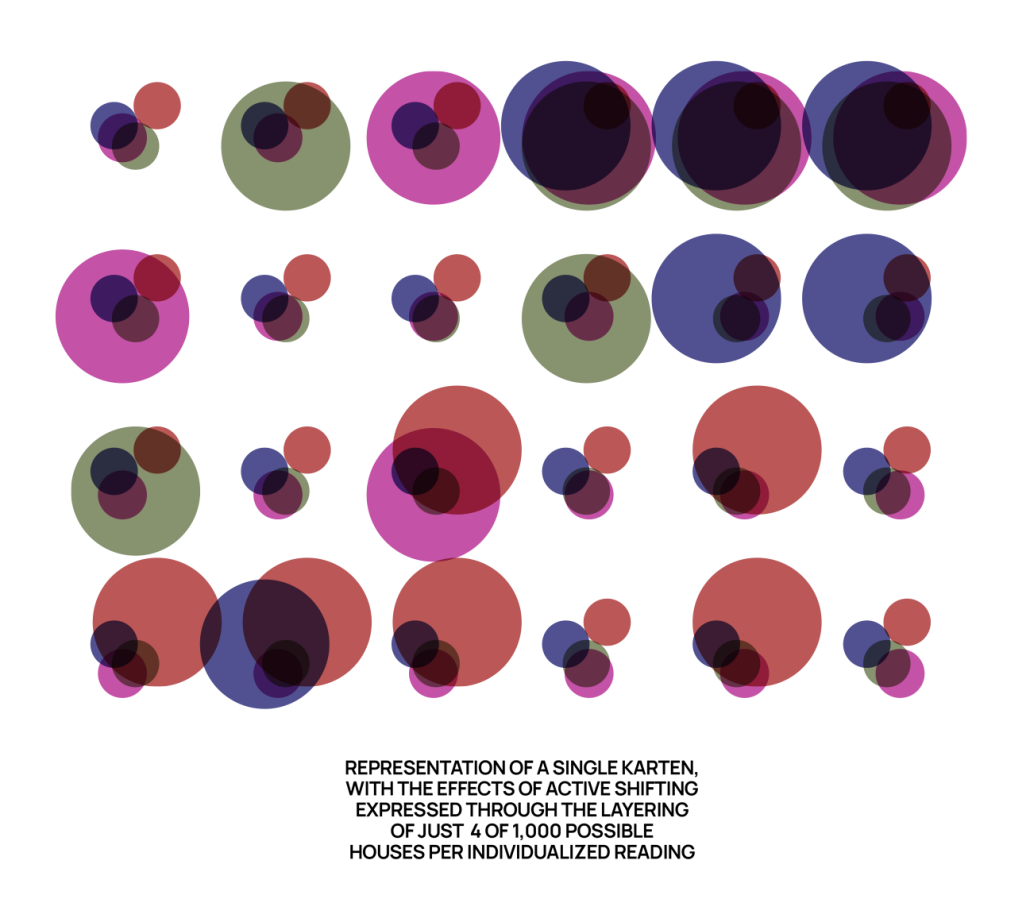
Kartens are grouped into sets of one thousand known as Houses, temporary zones where the Conditions stabilize long enough to generate consistent structure. Emotion shapes curvature, Time directs flow, Matter anchors, and Void establishes the limits. When a House is intuitively chosen or given to you, one karten inevitably asserts itself as the Prime Attractor, the first point of gravitation through which the House shifts out of neutrality and out of the early-stage Lattice of Coincidence.
The Prime Attractor does not provide meaning directly; it defines the gradient along which meaning will emerge.
When all Houses are assembled, the corpus generates Temporal Gradients: shifts in relational balance that mark changes in position within a multidimensional emotional field rather than the triviality of movement through time.
Only when all 134,596 kartens are considered together does the full Lattice become visible, revealing the geometry that shapes perception, orientation, and the boundaries of possibility.
 The principle is simple:
 The doctrine holds: